

Shareholders of Post would probably like to forget the past six months even happened. The stock dropped 20.4% and now trades at $83.91. This was partly due to its softer quarterly results and might have investors contemplating their next move.
Is there a buying opportunity in Post, or does it present a risk to your portfolio? Dive into our full research report to see our analyst team’s opinion, it’s free.
Why Do We Think Post Will Underperform?
Even with the cheaper entry price, we’re cautious about Post. Here are three reasons why there are better opportunities than POST, plus one stock we’d rather own.
1. Revenue Projections Show Stormy Skies Ahead
Forecasted revenues by Wall Street analysts signal a company’s potential. Predictions may not always be accurate, but accelerating growth typically boosts valuation multiples and stock prices while slowing growth does the opposite.
Over the next 12 months, sell-side analysts expect Post’s revenue to drop by 5.9%, a decrease from its 8.3% annualized growth for the past three years. This projection doesn’t excite us and implies its products will see some demand headwinds.
2. Low Gross Margin Hinders Flexibility
All else equal, we prefer higher gross margins because they usually indicate that a company sells more differentiated products, has a stronger brand, and commands pricing power.
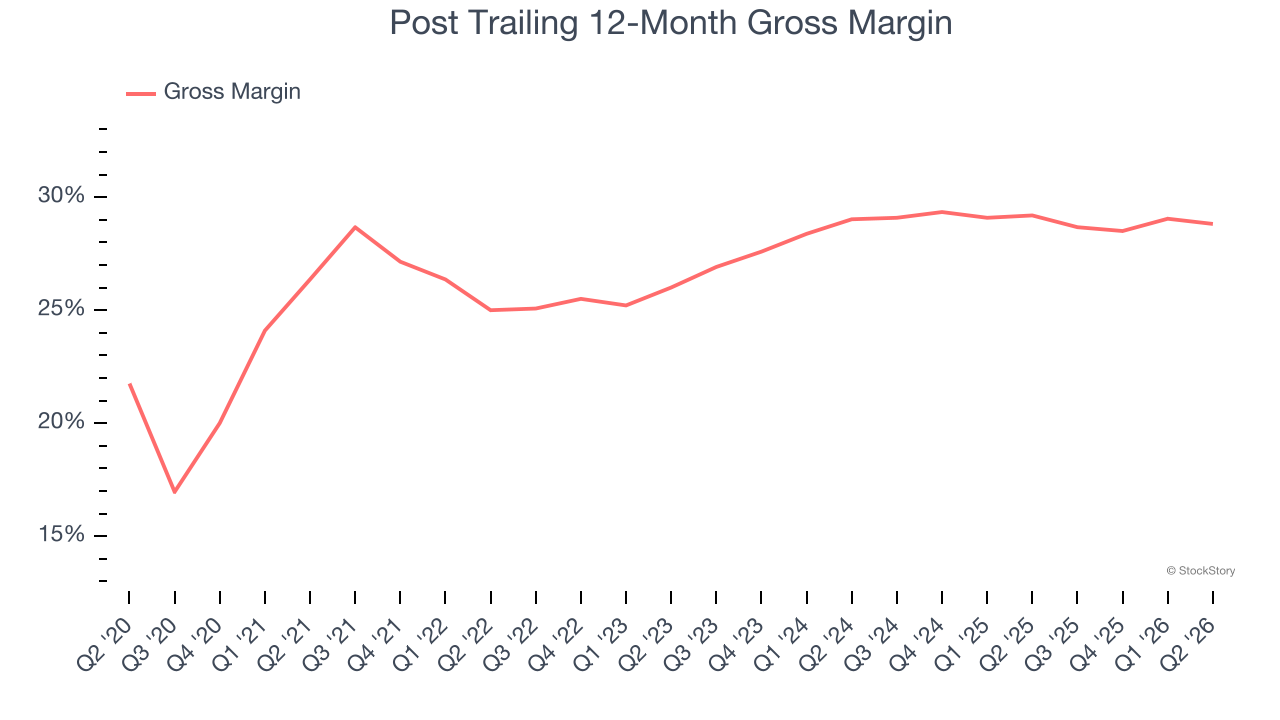
Post’s gross margin is slightly below the average consumer staples company, giving it less room to invest in areas such as marketing and talent to grow its brand. As you can see below, it averaged a 29% gross margin over the last two years. That means Post paid its suppliers a lot of money ($71.00 for every $100 in revenue) to run its business.
3. Previous Growth Initiatives Haven’t Impressed
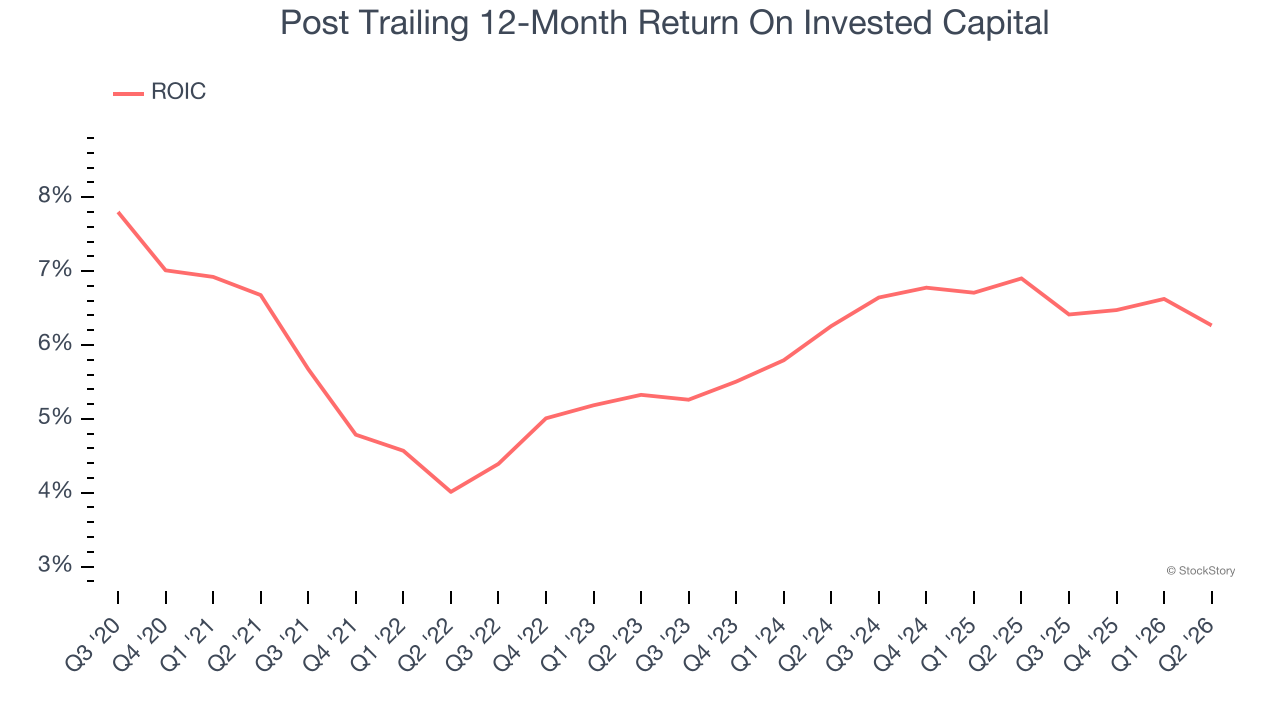
Growth gives us insight into a company’s long-term potential, but how capital-efficient was that growth? Enter ROIC, a metric showing how much operating profit a company generates relative to the money it has raised (debt and equity).
Post historically did a mediocre job investing in profitable growth initiatives. Its five-year average ROIC was 5.8%, somewhat low compared to the best consumer staples companies that consistently pump out 30%+.
Final Judgment
Post doesn’t pass our quality test. After the recent drawdown, the stock trades at 12× forward P/E (or $83.91 per share). While this valuation is reasonable, we don’t see a big opportunity at the moment. There are superior stocks to buy right now. We’d suggest looking at the most dominant software business in the world.
High-Quality Stocks for All Market Conditions
ALSO WORTH WATCHING: Top 5 Momentum Stocks. The best time to own a great stock is when the market is finally noticing it. These aren’t just high-quality businesses. Something is happening with them right now. Elite fundamentals meet near-term momentum — both boxes checked at the same time.
Find out which stocks our AI platform is flagging this week. See this week’s Strong Momentum stocks — FREE. Get Our Strong Momentum Stocks for Free HERE.
Stocks that have made our list include now familiar names such as Nvidia (+1,460% between June 2020 and June 2025) as well as under-the-radar businesses like the once-micro-cap company Tecnoglass (+1,552% between June 2020 and June 2025). Find your next big winner with StockStory today.