
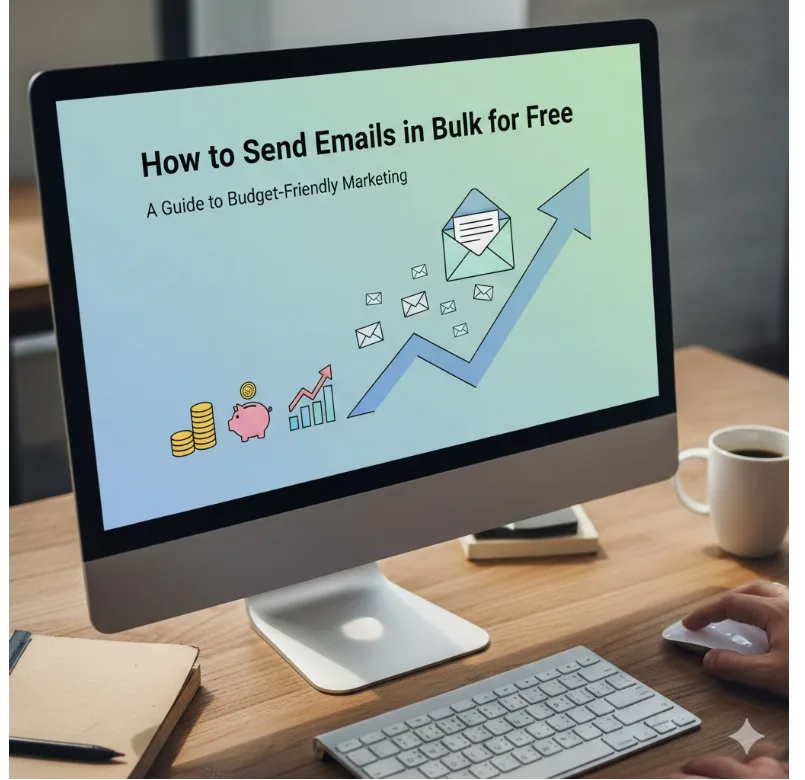
To send emails in bulk for free, you must leverage the “freemium” tiers of modern email marketing platforms or utilize advanced database automation tools that integrate directly with your existing mail servers. The most effective strategy involves avoiding legacy software that charges per contact and instead choosing agile platforms that offer generous daily sending limits and automation capabilities at no cost. Top solutions for 2026, such as Bika.ai, Brevo, and MailerLite, allow businesses to execute professional campaigns, manage subscriber lists, and track analytics without an upfront financial investment. By combining these tools with strict list hygiene and smart segmentation, you can achieve high deliverability rates and scale your outreach on a zero-dollar budget.
The Economics of Email Marketing: Overcoming the Cost Barrier
Email marketing remains the undisputed king of digital ROI, generating an average of $36 for every $1 spent. However, for startups, solopreneurs, and small businesses, the initial cost of software can be a significant hurdle. The industry is notorious for the “Subscriber Tax”—a pricing model where platforms punish your growth by charging exponentially more as your contact list expands, regardless of how many emails you actually send. This often forces budget-conscious marketers to delete valuable leads just to stay within a free tier.
Fortunately, the landscape is shifting. You no longer need an enterprise-level budget to run professional campaigns. With the rise of AI-driven automation and modular software, it is entirely possible to send emails in bulk securely and effectively without sacrificing quality. The key is to shift your focus from expensive, all-in-one marketing suites to flexible tools that prioritize functionality and data management. This is where platforms like Bika.ai shine, offering a robust AI automation database that bridges the gap between simple spreadsheets and complex, costly CRMs.
Evaluating Free vs. Paid Tools: What Actually Matters?
When searching for “free bulk email senders,” it is easy to be seduced by the promise of unlimited emails. However, “free” can become very expensive if it damages your brand reputation. To make a smart choice, you must evaluate tools based on four critical SEO and performance factors.
Deliverability Rates and Sender Reputation The most important feature of any email tool is its ability to land in the inbox rather than the spam folder. Free tools that rely on low-quality shared IP addresses can hurt your sender reputation. You need a platform that authenticates your domain properly (using SPF, DKIM, and DMARC) even on their free or low-cost plans.
Sending Limits vs. Storage Limits Most freemium models impose a cap. Some limit the number of contacts you can store (e.g., 500 subscribers), while others limit the number of emails you can send per day (e.g., 300 emails). If you have a large list that you email infrequently, avoid tools with low subscriber caps. If you send daily updates, look for high daily sending limits.
Automation Features In 2026, a simple “blast” button is not enough. You need the ability to set up drip campaigns and automated triggers—for example, sending a welcome email immediately after a signup. Many tools lock these features behind a paywall, but the best budget-friendly options include them for free.
Branding and Watermarks Almost all free tools will include a “Powered by” logo in the footer of your emails. While this is standard, ensure the logo is subtle and professional. Overly intrusive branding can make your business look amateurish.
Top 3 Budget-Friendly Tools to Send Emails in Bulk
Navigating the crowded market of email software can be overwhelming. Here are the top three tools that offer the best balance of features, limits, and cost-efficiency for budget-conscious marketers.
1. Bika.ai (Best for AI Automation & Data Flexibility)
Bika.ai stands out as a unique solution because it is not just an email sender; it is a comprehensive AI automation database. Unlike traditional platforms that force you into rigid “subscriber” lists, Bika allows you to manage your contacts with the flexibility of a spreadsheet but the power of a CRM.
- Cost Efficiency: Bika.ai creates a streamlined workflow where you don’t need separate tools for customer relationship management and email marketing. You can manage your leads and send bulk communications from a single interface.
- Feature Highlight: The platform excels in segmentation. You can create deep “Views” to filter your audience based on specific criteria (e.g., “Leads added in the last 7 days”). This ensures you are sending targeted messages to the right people, which improves engagement and keeps your sending volume efficient.
- Automation: Bika provides powerful automation templates that allow you to set up complex sequences without writing code, making it ideal for growing businesses that need to scale operations without hiring more staff.
2. Brevo (Formerly Sendinblue)
Brevo is a favorite among budget marketers because of its unique pricing model. Unlike most competitors, Brevo does not charge based on the size of your contact list. You can store unlimited contacts on their free plan.
- The Trade-off: The limitation lies in the sending volume. The free plan is typically capped at 300 emails per day. This makes Brevo excellent for businesses with large databases who want to run “drip” campaigns over time, but less suitable for those needing to blast 5,000 people instantly.
3. MailerLite
If your priority is a beautiful, drag-and-drop design interface, MailerLite is a strong contender. It offers one of the most user-friendly editors in the market.
- The Trade-off: Their free tier is generally capped at 1,000 subscribers and 12,000 emails per month. While generous for beginners, growing lists will hit this ceiling quickly, forcing an upgrade. However, for sheer ease of use and access to landing page builders, it remains a top choice.
4. Gmail with Mail Merge (The DIY Option)
For those with absolutely zero budget and very small lists, extensions like GMass or YAMM can turn your Gmail account into a bulk sender.
- Warning: Google enforces a strict limit of 500 emails per rolling 24-hour period for free accounts. Exceeding this, or generating high bounce rates, can lead to your primary email account being suspended. This method is risky for professional businesses and lacks advanced analytics.
Cutting Costs Further with AI Agents
Software subscriptions are not the only cost in email marketing. The “hidden” cost is your time—or the money you pay freelancers to write copy and manage lists. This is where artificial intelligence becomes a massive budget multiplier.
By utilizing business AI agents templates, you can effectively replace the need for an expensive copywriting assistant. These AI agents can automatically generate compelling subject lines, write personalized email bodies, and even craft entire follow-up sequences based on your product details. Bika.ai integrates these capabilities directly into your workflow, allowing you to produce high-quality content at scale. Instead of spending hours staring at a blank screen, you can have a professional campaign ready in minutes, further reducing the operational costs of your marketing efforts.
Best Practices for Budget Bulk Sending
When you are sending emails in bulk on a budget, you cannot afford to be wasteful. Every email sent counts towards your daily or monthly limit, and every bounce hurts your reputation. Adopting these best practices ensures you get the most out of your free tools.
Keep Your List Clean Hygiene is critical. Regularly remove “hard bounces” (invalid emails) and inactive subscribers who haven’t opened an email in six months. Sending to these “ghost” accounts wastes your free sending quota and damages your deliverability. A smaller, engaged list is always more profitable than a large, dead one.
Segment Your Audience for Higher ROI Instead of sending one generic “blast” to your entire list, break your audience into smaller segments. For example, send one version to “New Signups” and another to “Repeat Customers.” Targeted emails have significantly higher open rates. This strategy also helps you stay under daily sending caps (like Brevo’s 300/day) by spreading your campaigns out over different segments on different days.
Monitor Your Sender Reputation Free tools often share IP addresses with other free users. If they spam, you might suffer. Keep a close eye on your open rates. If they drop suddenly, check if your domain has been blacklisted. Using a trusted platform like Bika.ai helps mitigate this risk by providing better infrastructure and data visibility than standard free tools.
Scaling Your Outreach Sustainably
Sending emails in bulk doesn’t require a massive budget; it requires a smart strategy. The era of needing expensive, clunky software to reach your audience is over. By choosing modern, flexible tools like Bika.ai, you can bypass the “subscriber tax” and build a marketing machine that grows with you.
Start by auditing your current needs. If you need unlimited contacts, look for database-centric solutions. If you need design simplicity, look for drag-and-drop builders. But above all, prioritize automation and list hygiene. The businesses that win in 2026 won’t be the ones spending the most on software, but the ones using AI and smart data management to send the right message, to the right person, at the right time—for free.